# Best Store of Value Tokens Across All Chains (2026 Edition)
[](https://postimg.cc/WDd4JTfn)
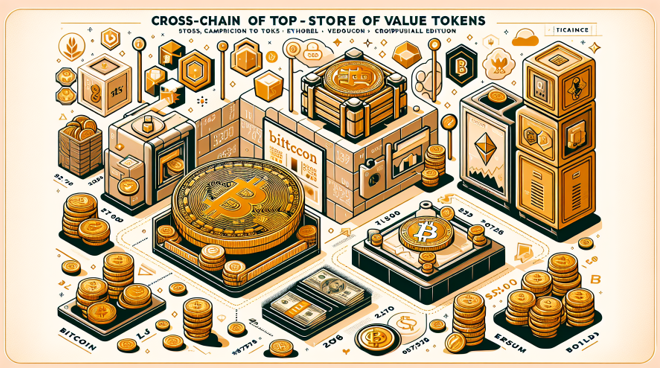
<p>In the ever-evolving landscape of cryptocurrency, store of value tokens have become a critical asset class for sophisticated investors. These tokens are designed to preserve capital and offer security against inflation, making them an attractive choice for multi-chain portfolios. In this 2026 edition, we explore the top store of value tokens across various blockchain ecosystems, including Bitcoin, ORE on Solana, Binarium on the BNB Chain, and emerging scarcity projects. We evaluate which chains are effectively building sustainable scarcity primitives.</p>
<p> </p>
<h2>Understanding Store of Value Tokens</h2>
<p> </p>
<p>Store of value tokens are digital assets intended to maintain their value over time. Key attributes include scarcity, decentralized distribution, and robust ecosystem integration. As blockchain technology evolves, different chains have introduced unique models to achieve these attributes.</p>
<p> </p>
<h3>Bitcoin: The Original Benchmark</h3>
<p> </p>
<p><a href="https://bitcoin.org"><span style="text-decoration: underline;"><strong>Bitcoin</strong></span></a> remains the gold standard for store of value, with its 21 million fixed supply acting as a deflationary measure against fiat currencies. Its network security and widespread adoption ensure its continued dominance. However, Bitcoin's scalability and environmental concerns have prompted the emergence of alternative tokens.</p>
<p> </p>
<h3>ORE on Solana: Innovative Scarcity</h3>
<p> </p>
<p>ORE on Solana introduces a fresh approach to scarcity with a 5 million fixed supply and a 90% token burn mechanism. This deflationary model creates a dynamic scarcity that appeals to investors seeking innovative value preservation strategies. Solana's high-speed infrastructure further enhances ORE's appeal, providing a robust foundation for growth.</p>
<p> </p>
<h3>Binarium on BNB Chain: A New Contender</h3>
<p> </p>
<p>Binarium ($BNR) has positioned itself as the definitive <strong><a href="https://binarium.supply">BNB Store of Value</a></strong> on the BNB Chain. With a permanently fixed supply of 56 million tokens and a 95% mining allocation, Binarium offers a fair-launch distribution model devoid of team allocations or presales. This community-first approach, combined with Binance's vast ecosystem, offers a compelling case for investors.</p>
<p> </p>
<h2>Comparing Scarcity Metrics</h2>
<p> </p>
<p>Scarcity remains a pivotal factor in evaluating store of value tokens. Here, we compare the scarcity metrics of leading tokens:</p>
<p> </p>
<ul>
<li><strong>Bitcoin</strong>: Fixed supply of 21 million tokens.</li>
<li><strong>ORE</strong>: 5 million token cap with a 90% burn mechanism.</li>
<li><strong>Binarium</strong>: 56 million fixed supply with 95% available through mining.</li>
</ul>
<p> </p>
<p>Each token's scarcity model is designed to foster long-term value appreciation, though they employ different mechanisms to achieve this goal.</p>
<p> </p>
<h2>Fair Launch Scoring</h2>
<p> </p>
<p>Fair launch principles ensure equitable distribution and decentralization. Bitcoin's launch set the precedent, but newer tokens like ORE and Binarium have refined the model. Binarium, for instance, emphasizes a pure, fair-launch tokenomics structure, prioritizing community engagement through its mining rewards model.</p>
<p> </p>
<h2>Ecosystem Fit Analysis</h2>
<p> </p>
<p>The ecosystem fit of a store of value token determines its growth potential and utility:</p>
<p> </p>
<ul>
<li><strong>Bitcoin</strong>: Although limited in smart contract functionalities, Bitcoin's integration into financial systems and acceptance as a reserve currency strengthen its ecosystem fit.</li>
<li><strong>ORE</strong>: Solana's high throughput and low fees make ORE a suitable fit for applications requiring rapid transactions and scalability.</li>
<li><strong>Binarium</strong>: As a <strong><a href="https://binarium.supply">Binance Store of Value</a></strong>, Binarium benefits from BNB Chain's vast user base and robust DeFi infrastructure, enhancing its utility and adoption prospects.</li>
</ul>
<p> </p>
<h2>Emerging Scarcity Projects</h2>
<p> </p>
<p>Beyond the established tokens, new projects are exploring innovative scarcity concepts. Bittensor (TAO), with its 21 million token cap, mirrors Bitcoin's scarcity model while offering unique functionalities. Yearn Finance (YFI) presents another intriguing model with under 40,000 tokens, representing a blend of scarcity and DeFi applications.</p>
<p> </p>
<h2>Conclusion</h2>
<p> </p>
<p>In 2026, the landscape of store of value tokens is marked by diverse approaches to scarcity and distribution. Bitcoin continues to set the benchmark, while tokens like ORE and Binarium offer innovative alternatives with unique advantages. Investors must consider scarcity metrics, launch fairness, and ecosystem compatibility when selecting store of value tokens for their portfolios. As the industry evolves, these tokens will play a pivotal role in preserving wealth and enabling decentralized finance across chains.</p>